GET TO KNOW | Thinker in Residence
In this interview, she shares insights into her work on film, festivals, and sustainability, her experience collaborating with the Festival team, and her curiosity about how large-scale cultural events connect with communities. From place-making and belonging to the role of art in social and environmental change, Karina reflects on how creativity and research can shape meaningful impact…
19 May 2026
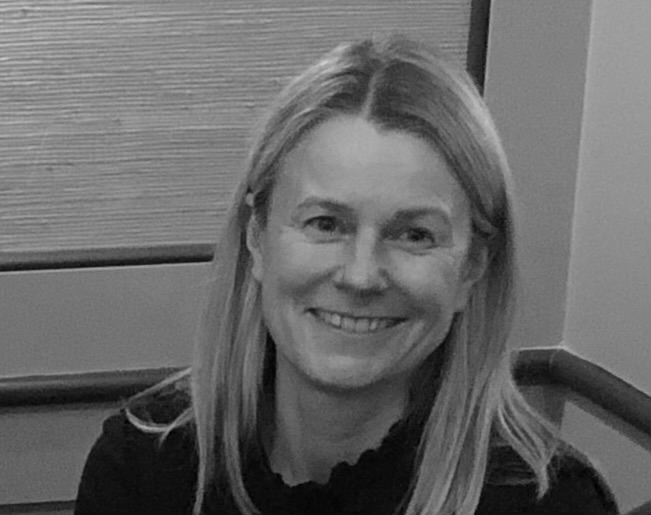
I’m Karina Aveyard, an Associate Professor in film and media studies at the University of East Anglia with a particular interest in teaching and research on film exhibition & distribution, film festivals, rural communities and sustainability and the environment. Alongside my academic role, I am the Director of the Green Film Festival @UEA, curating an annual programme of environmental film events and workshops that takes place in Norwich & rural Norfolk. I also make short films when I have opportunities to do so.
I have been an academic since 2012 and moved to Norwich from Australia for my job at UEA. Before this I worked in a variety of roles in the screen industry in Australia including in development and production for Columbia TriStar Television and the Australian Film Finance Corporation, and in research and policy for the Australian Film Commission and NSW Film and Television Office.
When I saw the opportunity late last year to apply to be the NNF Thinker in Residence I was immediately interested. The NNF is such a fantastic festival, unique, richly varied, innovative and successful. The chance to work with its team and to understand more about the NNF’s creative strategies and future ambitions – and contribute to that in some way through the Residency – was very exciting to me.
As Associate Professor of Media, Arts and Humanities at the UEA and Norfolk & Norfolk Festival’s first Thinker in Residence, how do you envisage working with the festival and what are you most curious to explore as part the residency?
To me being ‘in residence’ is crucial to this role and so I am regularly working at the NNF office in the Guildhall during the Residency. Being there is really important in building connections with the team and immersing myself in the whole ecosystem of the Festival.
At the start of the Residency I met with all the key staff to learn about the different areas of the Festival’s activities. These conversations provided valuable insight into the Festival and a much better understanding of the ideas and strategies that lie behind its activities. This has also enabled me to see how genuinely collaborative the team is, how they support each other and create a very positive environment to work in. I think that is reflected outwards in the Festival too and contributes to its success. One thing in particular I’ve noticed is how junior colleagues are supported with patience and kindness and lots of encouragement.
I am really curious to see how the team manages an event of the scale and diversity of the NNF with so many different types of event genres, venues and artists. That has always seemed to me such a huge achievement to bring together!
You have spent time with the Festival Connect & Create Team learning about their work for children, young people and communities across East Anglia. What is it about their work that resonates with you, as an academic and an artist?
The work of the Connect & Create Team is brilliant. They work with people who don’t have many experiences with art and culture, either as creators or audiences, and don’t necessarily see it as something for them or part of their lives. Education and class have a lot to do with feeling that art experiences are out of reach or lack relevance.
The Connect & Create team understand this very well and work with communities, especially in areas of deprivation and exclusion, to demystify and democratise art and culture for people. Working with children and young people especially they draw in the whole community that exists around that child and this amplifies the impact.
One of the key elements of their success is being able to reach people emotionally through their projects. Projects have to be accessible, practical and relevant, but to really change the way people think about and engage with art, they also have to feel something, that is what creates lasting connection. NNF’s long-term, visible commitment to communities in Norfolk through the C&C work builds trust and encourages and supports people to take risks with experiencing and letting themselves go with art and other cultural opportunities.
Seeing the way these projects run, from communities all the way through to the main programming of the Festival where they sit alongside artists from around the world, is very powerful. A school project from North Norfolk, for example, cannot compete in terms of scale or production values against an international performer or group, but putting these things together in a unified programme makes it clear that everything along that spectrum has value.
How can academic research help festivals better understand and respond to place-making and community needs? And, what tools or frameworks do academics bring that practitioners might not have access to?
Academic researchers have the opportunity to stand back from the everyday pressures of project delivery and see things outside the frameworks of funder/sponsor obligations and reporting. With the benefit of this distance and with our theoretical training academics can suggest a wider range of ideological and conceptual perspectives that may be useful for reflecting on and evaluating project work.
The NNF team engaged in project delivery, at all levels, are very knowledgeable and hard-working and have a very good understanding of the communities they work with. They have a clear sense of what they are trying to do. I see my role in this Residency in helping them to articulate their excellent work in different and expanded ways, providing a catalyst to explore different concepts and language to talk about projects and expand how they can advocate for their value – and continued funding
” Experiencing or creating art can feel positive and empowering and that can be very enriching on an individual level. But what it also does is anchor a set of emotions, identities and histories associated with that art in a particular place ”
How can art shape a sense of pride, identity or belonging within a place?
Places are constituted not just by where they are but by the social relations and events that occur within them. We are all familiar with how our feelings about a particular location develop and can change (both positively and negatively) as we come to know it better by having experiences there and/or understanding more about its history.
Experiencing or creating art can feel positive and empowering and that can be very enriching on an individual level. But what it also does is anchor a set of emotions, identities and histories associated with that art in a particular place – and that can be very powerful in terms of creating a sense of belonging for people that is simultaneously connected to the art and the place where it was encountered.
That all sounds quite utopic but we also know that places can sometimes be insular, emphasising cohesion and homogeneity and not necessarily being open to new people or ideas.
Doreen Massey, a British social scientist and geographer, wrote a very influential essay in 1991 about these tensions. In that article she called for a more progressive approach to place-making, one in which the character of a place is externally as well as internally connected. So that the essence or character of a place is understood not as something that is static but as always in dialogue with places and people beyond. The way NNF celebrates the local and brings the national and international together into the unified framework of an arts programme I think really embodies and enacts Massey’s progressive place idea.
What advice would you give to festivals wanting their work to better reflect local needs and to have a deeper social impact?
I’m not sure I am qualified to give advice to festivals and people who do this kind of work everyday! What I have learned from my own work with the Green Film Festival and which has been reinforced by people I’ve met at NNF is that meaningful dialogue is vitally important. Listening and learning are crucial for successful collaboration and that requires time and repeated interactions and contact. Taking this kind of approach demonstrates respect and that goes a long way in building trust and getting people to take risks and come with you on a project, even when they may feel outside their comfort zone.
I think it is also important to be able to understand your positionality, what ideas, experiences and preconceptions you bring into encounters with communities and artists. You need to be able to be emotionally responsible for yourself in these situations and leave your ego to one side a bit so that you can be open to recognising where you might need to think differently about something or take a different approach to getting something done.
You are hosting a unique event in the Festival called Culture, The Environment & Social Transformation. Can you share more about how you will using film and poetry to compliment the lecture that Frances Morris CBE will be delivering?
I am very interested in how people use art and culture to think and talk about the large-scale challenges of contemporary life and that is a key focus of my Residency. The environment is one of those major challenges that impacts on so many aspects of everyday life and is the focus for this event.
We can think about and understand the environment in scientific, strategic and policy terms – and all those things are necessary and very important. But we also need art, formats like film and poetry, that reach us emotionally. These provide people with space to share their worries and grief, move people in ways that makes them feel brave and hopeful, and enables us to imagine and speculate (dream) about transformation and how things could be different. Change cannot happen unless it can first be imagined and so I think art is really fundamental to our collective futures.
That is the idea behind creating a dialogue between the more traditional form of a public lecture and creative outputs – my aim is to show art and practicality don’t have to stay within separate contexts but that they can complement and enrich each other.